
Spring Tennis, Spring Injuries
How to Get Back on Court Without Breaking Down

The end of March is when many tennis players look outside, feel the first decent weather, and decide to make up for a whole winter in one week. That is exactly when injury risk tends to rise. Tennis loads the whole kinetic chain from the feet and knees through the core to the shoulder, elbow, wrist, and racquet and the serve is the most demanding stroke in the sport. Reviews of tennis injuries show a familiar pattern: acute problems are more common in the lower body, while chronic overuse problems often show up in the shoulder, elbow, and wrist.
The spring issue is usually not bad luck. It is a load spike. If a player did little or no indoor tennis over the winter, then long outdoor hits, hard serving, hard courts, and consecutive days can outpace what the body is ready to absorb. NIAMS lists overtraining, increasing intensity too quickly, hard surfaces, unsupported shoes, poor technique, poor flexibility, and prior injury among the main risk factors for sports injuries.
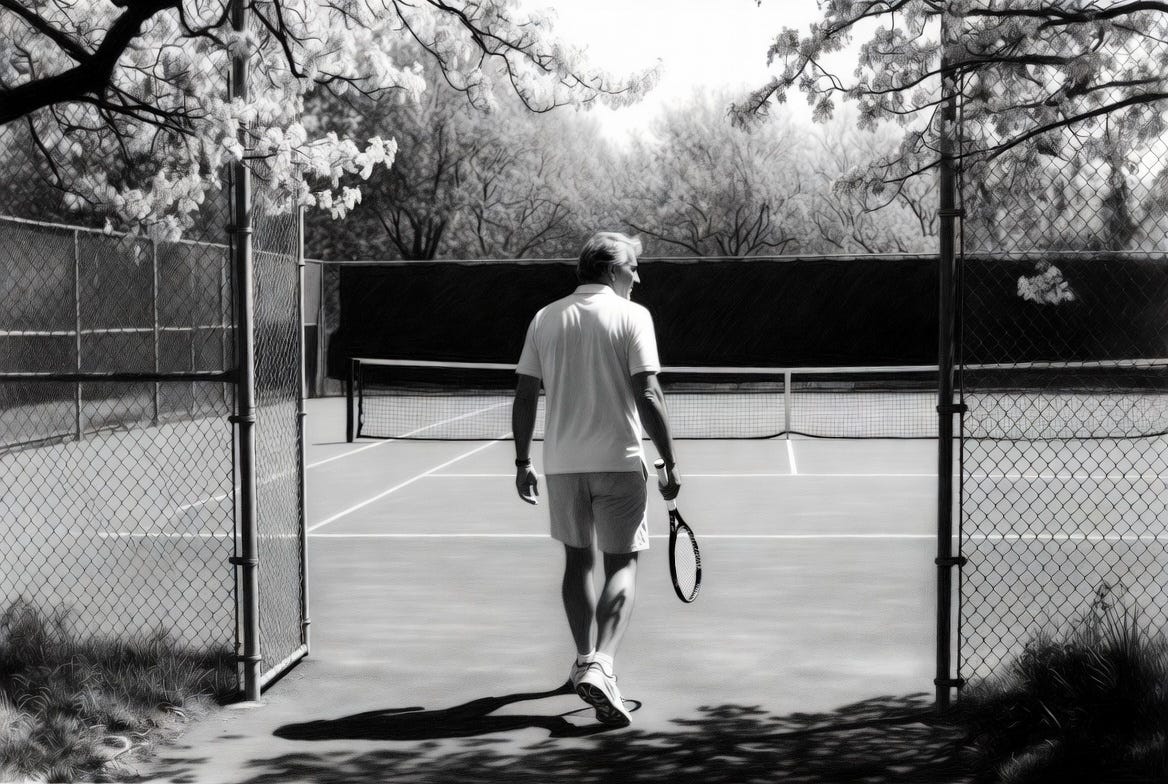
The smartest return is to treat late March like a re-entry block, not midsummer peak form. In the HSS interval tennis program, players build back in sequence: mini-tennis first, then controlled groundstrokes, then more advanced court work and serving, with explicit attention to tennis load and volume. That program is designed for return after injury, but the same staged logic is useful for a healthy player coming back from a winter layoff.
Warm up before the first ball counts
The first baseline rally should not be your warm-up. Start with 5 to 10 minutes of low- to moderate-intensity movement such as jogging, cycling, brisk walking, or similar and then move into controlled dynamic drills. HSS, the ITF, and USTA all emphasize dynamic warm-ups before tennis, not long static stretching right before play. Useful choices include jogging with arm circles, side shuffles, high-step trunk rotations, lateral lunges, leg swings, high knees, butt kicks, crossovers, and a few minutes of easy hitting. Keep the movements controlled rather than bouncy or jerky.
Make serving the last thing you build, not the first
For a spring starter, the serve is where enthusiasm can outrun tissue tolerance. Serving puts especially high forces through the shoulder and elbow, and it is the stroke most tied to overload. Early outdoor sessions should rebuild rally tolerance first, then add a small amount of easy, technically clean serving before chasing first-serve pace. A good March rule is simple: do not make your first serious workout of the year a bucket of flat serves.
Rebuild the body that plays tennis
Tennis fitness is not just tennis. WHO recommends muscle-strengthening work for major muscle groups on two or more days per week, and HSS emphasizes endurance, upper- and lower-body strength, speed/agility, and core stability for tennis performance and injury prevention. For a spring return, that means some combination of aerobic conditioning, leg strength, hip and glute work, trunk control, and shoulder-blade and rotator-cuff work. If you have barely trained all winter, it makes sense to rebuild general conditioning alongside your hitting rather than hoping tennis alone will do it.
Shoes, racquet, and mechanics matter more than people think
Spring tennis often begins with old shoes and rushed mechanics. HSS recommends supportive, properly fitted tennis shoes and a racquet with the right grip size that is not too heavy or strung too tightly. HSS also stresses early racket preparation, while upper-extremity research shows that inefficient kinetic-chain mechanics can overload later links in the chain; recreational players, in particular, often use excessive, uncoordinated force that increases joint stress without improving ball speed. A short tune-up with a coach early in the season can be a practical injury-prevention step, not a luxury.
A sensible way to use the first two weeks of spring
For a player who barely played all winter, a reasonable conservative pattern for week one is three nonconsecutive court days: one short easy hit built around mini-tennis and controlled rallying, one slightly longer drilling session with only a few easy serves, and one session that still ends before fatigue wrecks footwork and timing. On non-court days, add light strength work and easy conditioning. In week two, add a little more volume, a little more serve work, and only a small amount of live points or match play. The goal is not to prove fitness on day 1. The goal is to stack healthy sessions so that April feels normal instead of painful.
Do not play through the warning signs
One of the clearest medical recommendations is also the hardest for recreational players to follow: do not try to work through pain from an injury-provoking movement. NIAMS says to stop if a movement causes pain and to seek medical care for severe pain, swelling, or bruising; pain and swelling that do not improve after a few days; inability to bear weight; or obvious deformity. For milder problems, rest and ice can be reasonable first steps, but symptoms that persist or worsen deserve evaluation.
The best spring plan is not dramatic. Warm up a little longer than you think you need to. Build hitting volume before match volume. Add serves gradually. Do some strength work. Wear real tennis shoes. Clean up the mechanics. If you do that now, the odds are much better that spring tennis will feel like a return to form rather than the beginning of an injury cycle.
Players with current pain, a recent injury, or repeated flare-ups should get an individualized ramp-up plan from a sports-medicine clinician or physical therapist rather than relying on a generic preseason routine.
Timur Tokayev is a tennis coach and instructor. He writes about performance, strategy, and the evolving science of modern tennis. Learn more about his coaching philosophy and lesson programs at his official website: https://sites.google.com/view/timurtokayev/
Disclaimer: This article is provided for general informational and educational purposes only. It is based on publicly available sources and is not medical advice, diagnosis, treatment, or individualized training, rehabilitation, or return-to-play guidance. Reading this article does not create a physician-patient, physical therapist-patient, or other professional relationship. Consult a qualified physician, physical therapist, or other licensed healthcare professional before starting or changing any training program, especially if you have pain, a prior injury, or a medical condition. Individual circumstances and risk factors vary. Timur Tokayev is not a physician or physical therapist.